SimInForest Project – building an innovative approach to link marteloscope exercises to simulation models
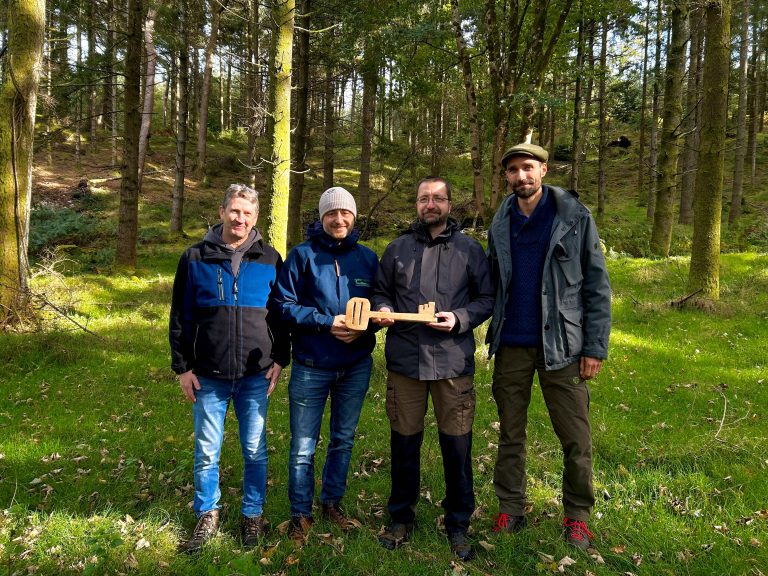
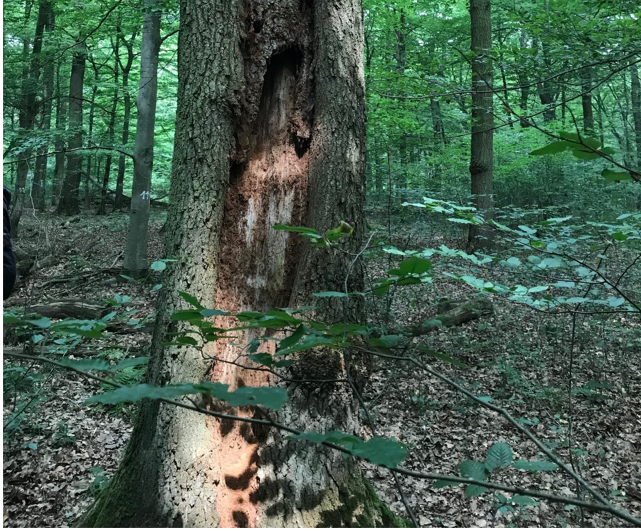
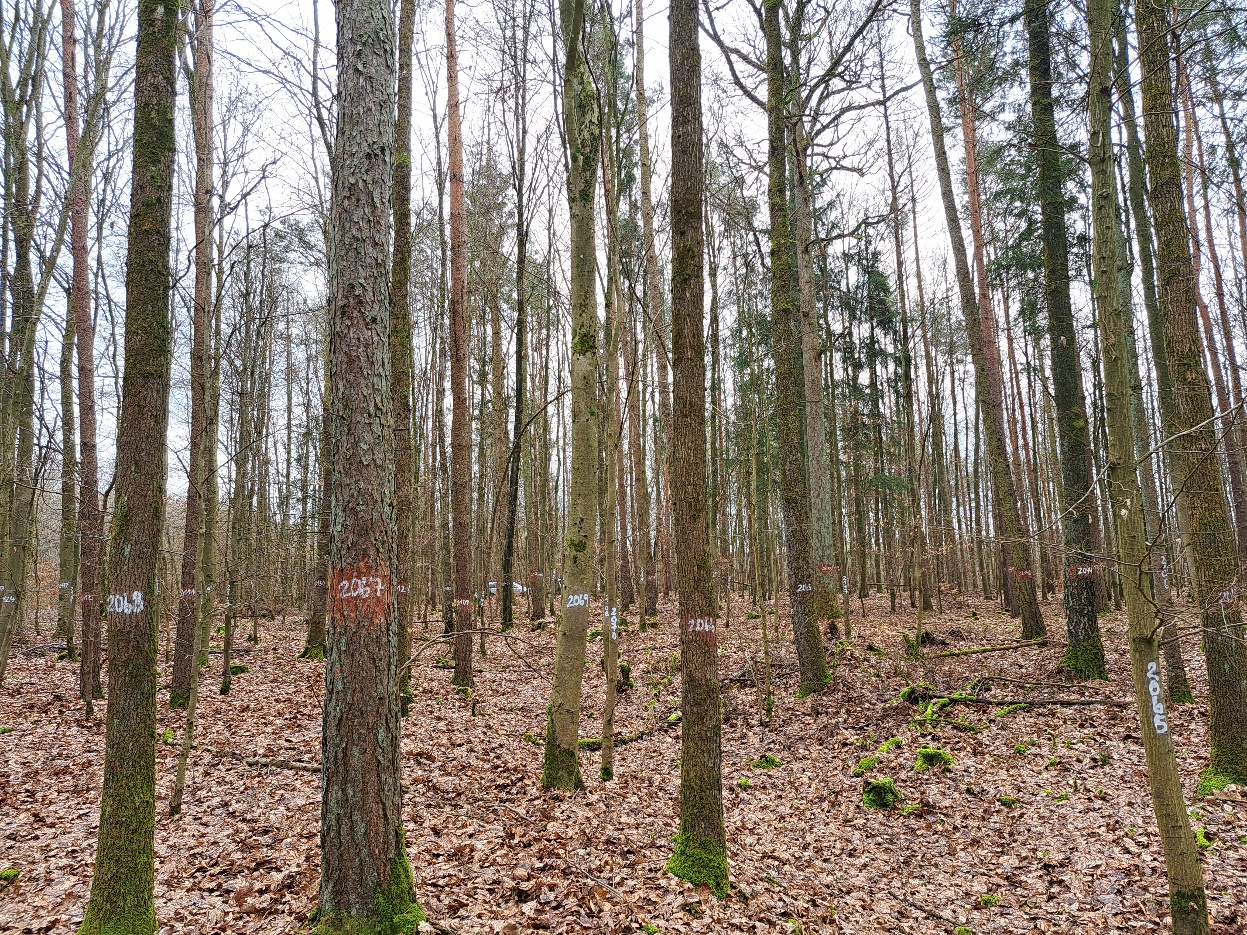
The marteloscope Sailershausen 2.
Written by Andreas Schuck, Senior Researcher at the European Forest Institute
Integrating multiple forest management objectives and increasing forest resilience despite the uncertainties of our climatic and socioeconomic future is a challenge for forest managers. Marteloscopes are field plots in which every tree has been mapped and measured. They are thus an ideal tool for silviculture training addressing management challenges. With the help of a software that runs on mobile devices (“I+” software package) virtual silviculture interventions can be performed directly in Marteloscopes and the results retrieved. In this way training participants can observe the impact of their interventions on various ecosystem services and discuss their results and applied silvicultural practices. This training approach has become very popular and a large network of marteloscope sites has emerged across Europe and beyond.
However, quantitative analyses of marteloscope exercise results are limited to comparisons of the forest stand before and immediately after a single silvicultural intervention. Potential stand evolution after a virtual thinning and potential management prescriptions are discussed based on the expertise of marteloscope trainers and the participants but lack quantitative support. Here SimInForest “Combining field exercises and simulations on marteloscopes to develop integrative and sustainable silviculture approaches” comes into play. SimInForest, which is financially supported by the Velux Foundation, has started in autumn 2025 and will test an innovative approach combining marteloscope exercises with stand simulations. The aim is to make simulation results available during the field training thus expanding knowledge co-construction power of the exercise. It will also allow participants to discuss the outcomes on the basis of quantitative data and put in context of their own anticipated silvicultural approaches.
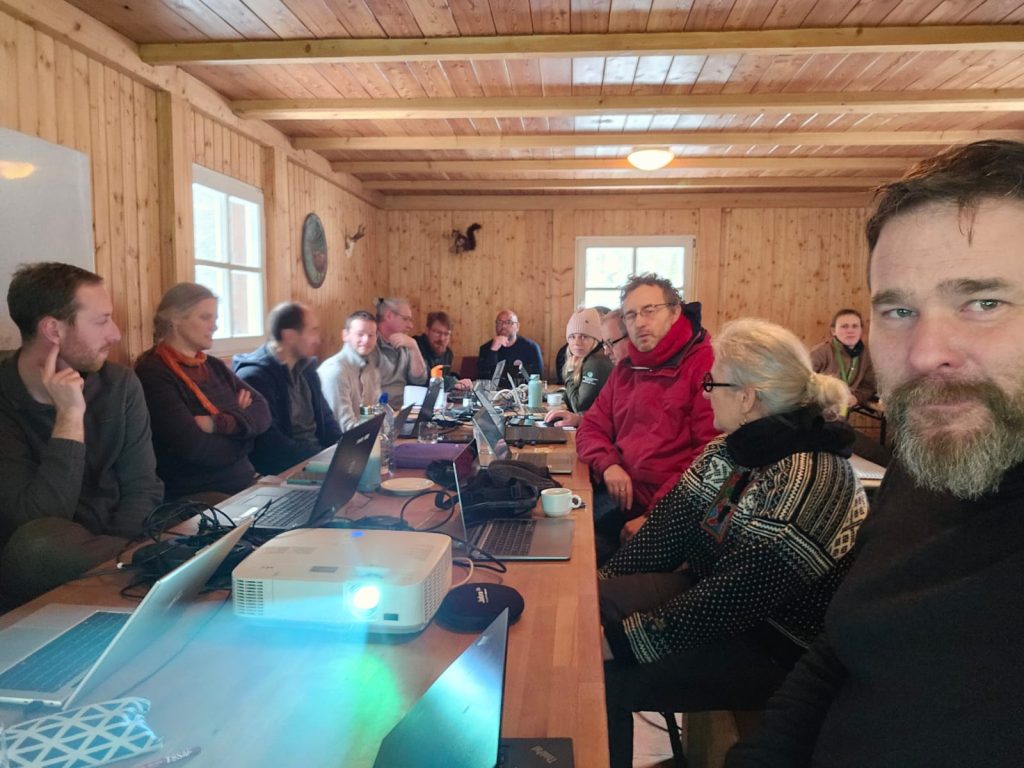
Getting introduced to the different software packages.
During the first months of SimInForest the link was built between the “I+” tablet software and the Samsara2 simulation model. Samsara2 is an individual-based and spatially explicit simulation model, which can simulate forest dynamics (regeneration, growth and mortality) in mixed and uneven-aged forests. Field exercise results that are saved on the tablets (“I+”software) can now be transferred to Samsara2 for further processing. Following this important technical step the eleven practice partners were introduced to the software packages by the coordinator INRAE (Samsara2) and EFI (“I+” software). This took place during an in-person meeting on the 14th and 15th of January 2026 at the Forest Enterprise Sailershausen in Germany, which is one of the projects’ practice partners. The participants had the possibility to visit the local marteloscope where they tested the I+ software, familiarised with installing Samsara2 in group sessions and to get to know each other in person. Further they were introduced to the Forest Enterprise Sailershausen, its forest management, specificities and faced challenges.
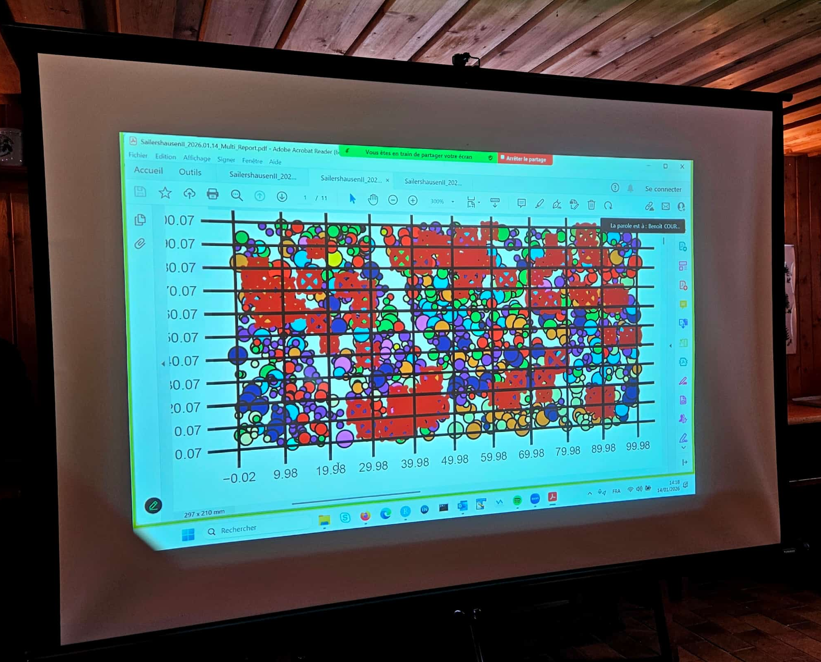
Introduction to Samsara2 and its functionalities.
The meeting was well received by the practice partners and made them curious to utilise the different software components in combination for training exercises. Next steps will be to further get tailored training on the use of the software packages and following that move onwards to building a portfolio for training events.
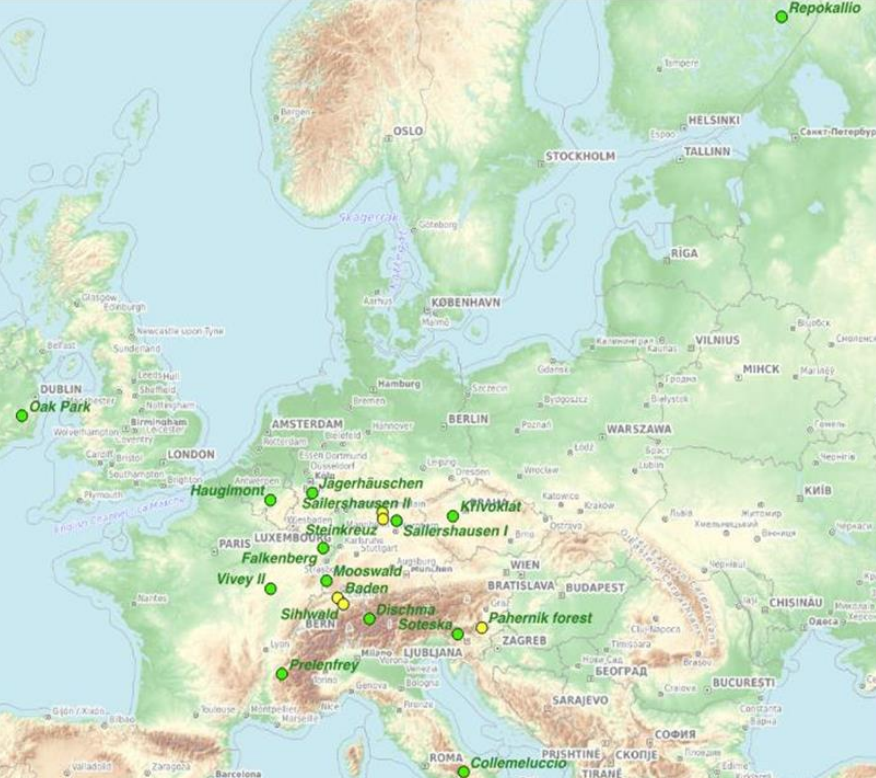
Map of marteloscope sites (green: main sites; yellow: optional sites)
SimInForest project partners:
- INRAE (Institut national de recherche pour l’agriculture, l’alimentation et l’environnement) (Coordinator), France
- European Forest Institute, Finland
- University of Würzburg / Forest Enterprise Sailershausen, Germany
- AgroParisTech, France
- University Liège / Gembloux Agro-Bio-Tech, Belgium
- Forêt Nature, Belgium
- SYCOPARC / Parc Naturel Régional des Vosges du Nord, France
- Office National des Forêts (ONF), France
- Czech Forestry Institute, Czech Republic
- TEAGASC, Ireland
- Slovenia Forest Service, Slovenia
- WSL (Swiss Federal Institute for Forest, Snow and Landscape Research), Switzerland
- UNIMOL (University Molise), Italy
Contact:
Benoit Courbaud
SimInForest Project Coordinator
University Grenoble-Alpes – INRAE
UR LESSEM – Mountain Ecosystems and Societies Lab.