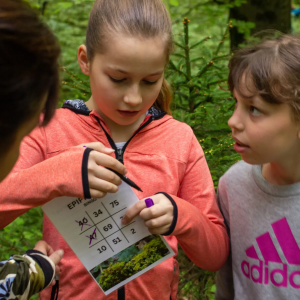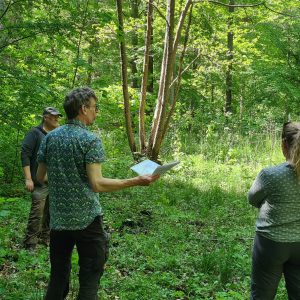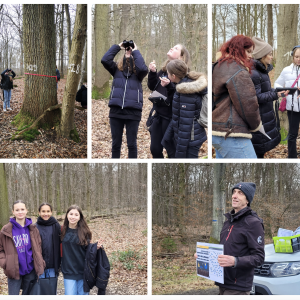

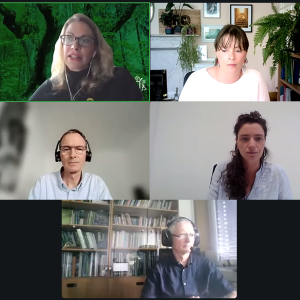
On July 3rd, nearly 200 participants gathered online to explore the relation between forest resilience and biodiversity at our Integrate webinar hosted in collaboration with TRANSFORMIT project. The aim was to better understand how diverse actors, whether in science, policy or practice, can better support forest ecosystems in coping with current and future climatic changes. After...
Author: admin
New Research Publication on Tree-related Microhabitat Diversity in an International Journal of Forest Research
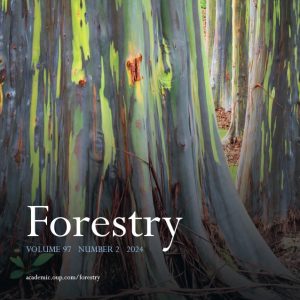
Tree-related microhabitat diversity as a proxy for the conservation of beetle communities in managed forests of Fagus sylvatica Forestry: An International Journal of Forest Research, Volume 97, Issue 2, April 2024, Pages 223–233 Integrating the conservation of biodiversity into silvicultural practices is one of the main challenges facing forest owners in the promotion of an...
MOUNTAINSIDE: New “classroom in the forest” was inaugurated in Italy
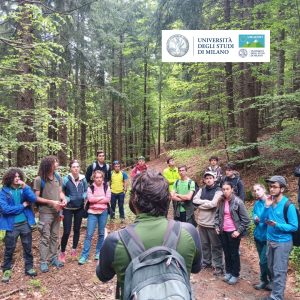
With the inauguration of the Marteloscope at Faeto – Edolo, UNIMONT – a University of Milan hub, offers its students a “classroom in the forest” included in the European network of integrated educational forests which represents a unique opportunity for those who intend to study the mountains in the mountains. The Marteloscope at Faeto –...
INTEGRATE WEBINAR: Forest Ecosystem Resilience through Biodiversity – Nature’s Insurance Policy in a Changing World
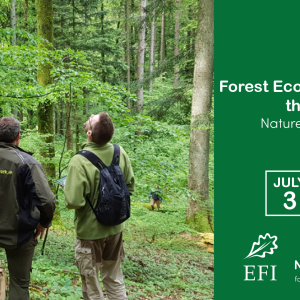
We are pleased to announce this year’s Integrate Webinar titled “Forest Ecosystem Resilience through Biodiversity – Nature’s Insurance Policy in a Changing World”. The webinar will take place online on 3rd of July from 16.00 – 17.30 CEST via Zoom. With this webinar, we would like to reflect upon how we can support forest ecosystems to...
Guidelines on ‘Closer-to-Nature Forest Management’ now available in all EU languages
Published in July 2023, the Guidelines on Closer-to-Nature Forest Management are now available as brochure in all EU languages. They’ve been translated to facilitate a better use by local forest actors and stakeholders across European countries. Why develop Guidelines on a Closer-to-Nature Forest Management ? Under the European Green Deal, the EU biodiversity strategy for 2030 sets a path for...
An outdoor classroom in the forest: new “marteloscope” educational site inaugurated in Ljubljana
Šmarna gora, the highest hill in the city of Ljubljana, is now more than an iconic landscape monument and a destination for hikers. With the opening of the first “marteloscope” in central Slovenia, its slopes have been transformed into an outdoor classroom for school pupils thanks to an initiative of the EU-funded research and innovation...
‘10 Must-Knows’ as guide for preserving biodiversity
New policy report with chapter on integrating biodiversity conservation with forest management From yet undiscovered biodiversity to resilient forests and the impact of food consumption on nature: 64 experts have now pooled their knowledge and recommendations and published them in the form of “10 Must Knows from Biodiversity Research” for 2024. The new report from...
Five fact sheets about biodiversity measures in managed forests
In spring 2023, two two-day field courses on biodiversity in managed forests took place in Denmark. Five fact sheets were developed as science-based and practical course materiel aimed at forest managers and forest owners. The courses were organized by Copenhagen University, Center for Marcroecology, Evolution and Climate. The fact sheets are now available in English....
Same trees, different perspectives: using a marteloscope to present forests in a new light
What do you see when you look at a forest? The first, obvious answer could be “trees”, but the more nuanced reality is that forests have different meanings and values to different people. Trees provide important habitats to animals, such as cavities for bats to sleep in and branches for birds to build their nests...
Summer School 2024 – “Forests and Extremes: Crisis or Transition?”
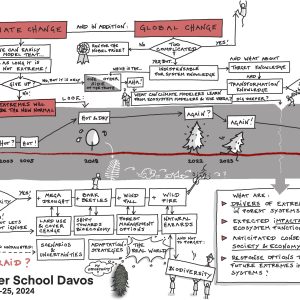
Is early browning in European forests a harbinger of tree death or simply a sign of temporary stress? In 2018, science could not answer this question. But one thing was clear: the frequency of extreme events, including droughts, had increased after the hot summer of 2003. Even though droughts also occurred during the last century,...