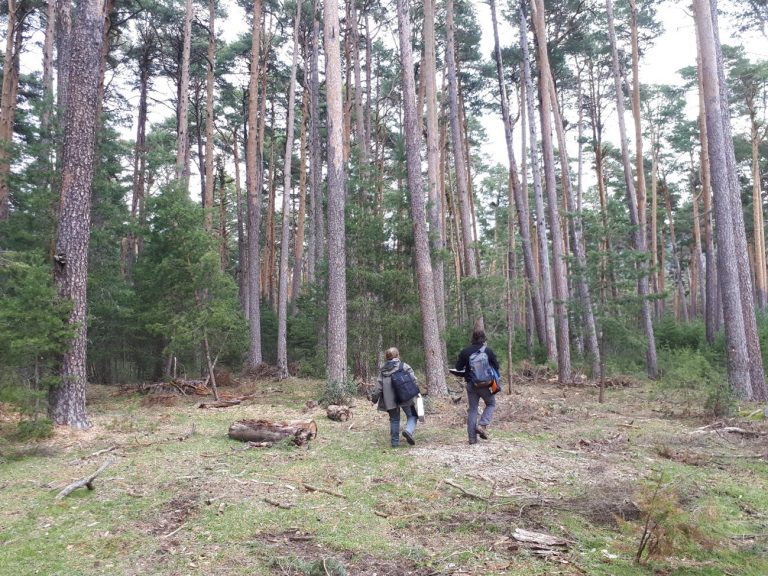
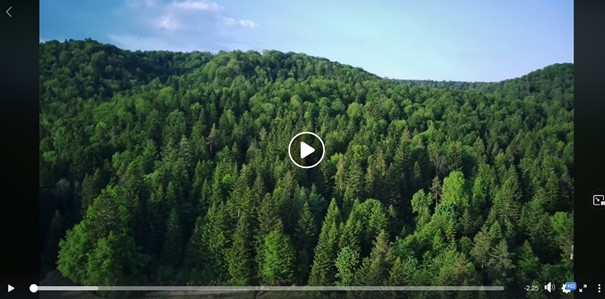
Today the area of South-Eastern Poland is characterised by a relatively high forest cover, reaching over 60% in foothills and mountainous areas. But is has not always been so green here. Compared to 1945 there has been a 20% increase in forest cover in this region. Post-war displacement of inhabitants from this very densely populated...
Tag: biodiversity
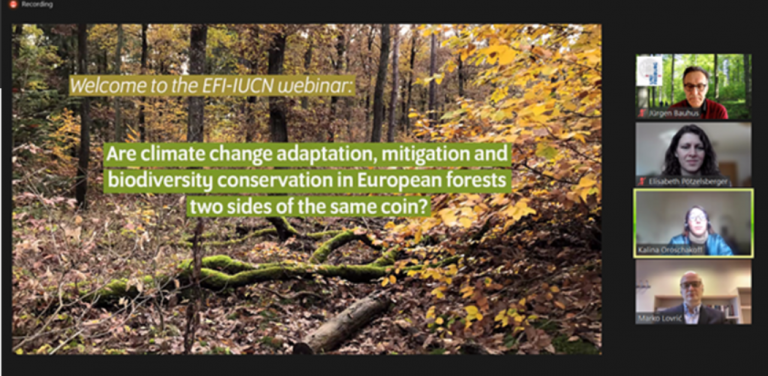
Webinar Recap – Climate change adaptation, mitigation and biodiversity conservation in European forests
Do climate adaptation, mitigation and biodiversity conservation goals walk hand in hand when it comes to the management of Europe’s forests? Or are they closely related, but essentially different pursuits? To unravel the complexities of the topic, EFI and IUCN invited representatives from the EU Commission, academia, and the advocacy and policy arenas to debate...
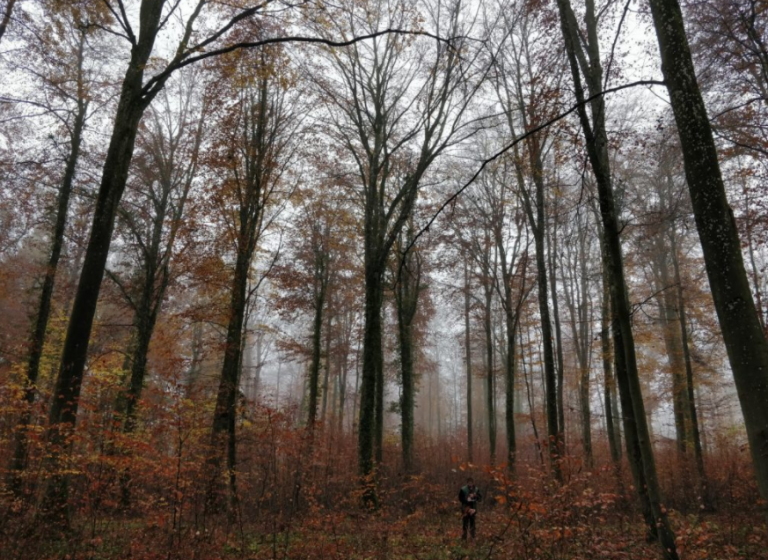
A week in the life of a marteloscopist
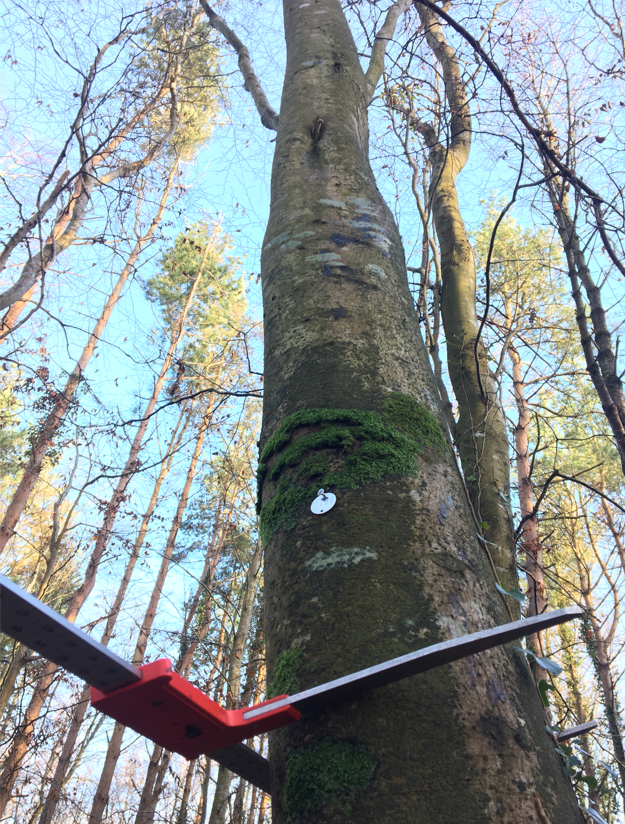
Getting to the forest before sunrise, hugging trees to determine their diameter, spotting microhabitats despite rainy and foggy weather – setting up a marteloscope site is not a walk in the park. But as you can read in this illustrative blogpost by Jakob Derks, it is an interesting procedure, and an important contribution to enable...
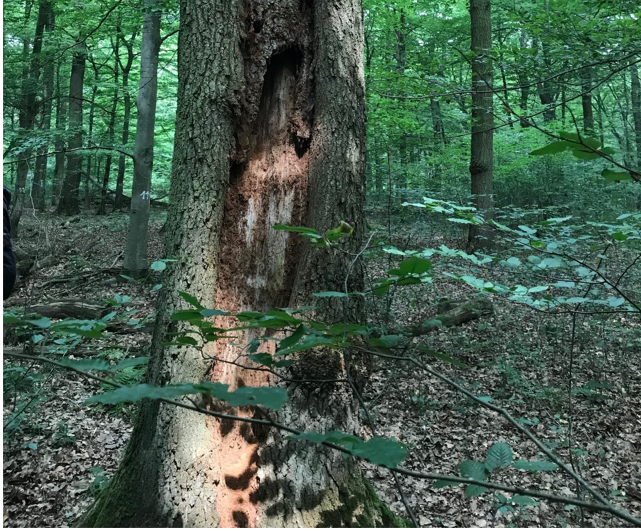
Co-occurrence patterns of tree-related microhabitats: new paper out
A Tree-related Microhabitat (TreM) is a distinct, well-delineated morphological singularity occurring on living or standing dead trees, which constitutes a crucial substrate for species. Cavities, conks of lignivorous fungi and dead branches are examples of TreMs. TreMs are widely recognized key features of biodiversity and are useful indirect indicators for biodiversity. Therefore, researchers have suggested...
European forests in 2080: visions, challenges and the role of the European Network Integrate
How can we improve the management of our forests to make them more resilient to impacts of climate change and the increased risk of disturbances? What can we do to first predict and then adapt to change? How can we enhance biodiversity in our forests while still provide wood for the bioeconomy? What can we...
“Monte de Valsaín” Marteloscope: challenges and opportunities within the Integrate Network.
Since the First National Meeting of the Integrate Network in Spain (more details here), Spanish partners of the Network have been working in the development of the booklet of the “Monte de Valsaín” Marteloscope (to be published soon). This process has led to engaging discussions about many topics, from the main challenges related to forest...
Managing England’s woodlands in a climate emergency – a guide to implement adaptation actions
How will climate change affect England’s trees and woodlands? What measures can be taken to minimize risks and ensure the protection of woodlands for future generations? How to cope with simultaneous threats such as tree pests and diseases? Based on the UK Forestry Standard’s governmental approach for sustainable forest management, the Forestry Commission published a...
Virtual conference: Incentives for Forest Ecosystem Services in Europe
In this inspiring 2-day conference SINCERE and NOBEL will present a comprehensive overview of the situation for Forest Ecosystem Services (FES) and related mechanisms in Europe and the related science, practice, business and policy considerations.
Webinar: EU Forest Strategy: Strengthening forests for biodiversity & climate change
IUCN and EFI have joined forces to present an open, high-level webinar and exchange on the New EU Forest Strategy for 2030. The webinar on 22nd September, organised via the SINCERE project and Integrate Network, will bring together key stakeholders interested in and contributing to the implementation of the Forest Strategy, to reflect on the...
Combining silviculture and ecology to benefit our forests – the Irish way
Ireland is one of the few countries in Europe that experienced almost complete deforestation in recent history with just over 1% forest cover remaining at the beginning of the 1900s. Since then, an impressive effort has been made by the State of Ireland and other stakeholders to increase forest cover – but the Irish plan...