Five Students, One Mission: To Set-up a New Belgian Marteloscope
For one semester, Simon Musin, Antoine Van Lede, Samuel Konsdorff, Louis Uytterhaegen and Tom Schriewer shared a mission: To figure out how to set up a new marteloscope close to their Gembloux Agro-Bio Tech faculty in Belgium.
But how does one set-up a 1-hectare forested, monitored, and mapped site, used to train forest managers, owners or students on the intersection of biodiversity conservation and timber production?
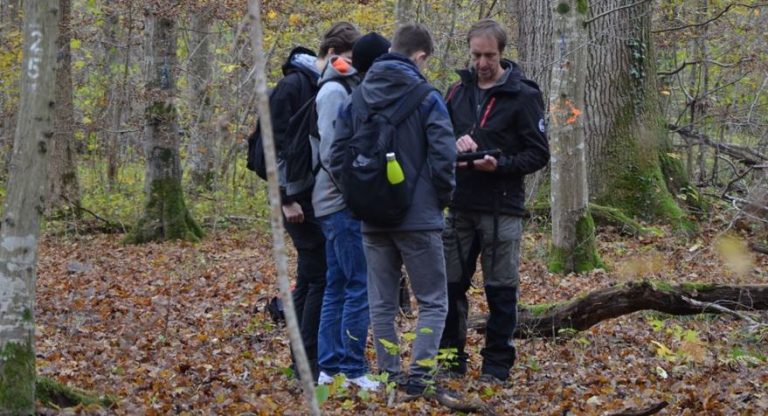
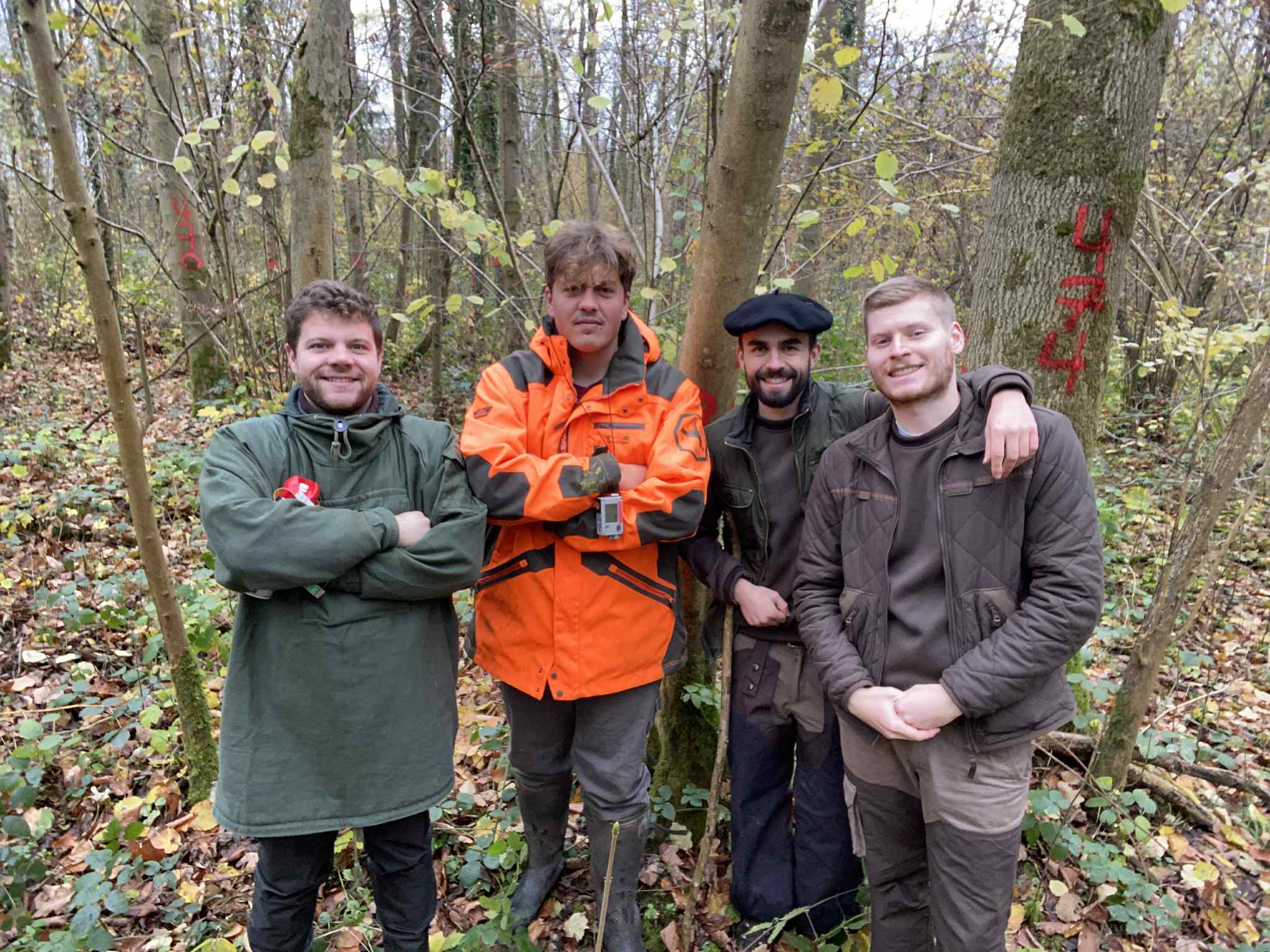
We sat down with Samuel (left), Tom (middle), and Antoine (right) to find out more.
“We chose the course because it seemed interesting – with lots of fieldwork”, proclaims Tom Schriewer, one of the five bioengineering students from the University of Liège, who helped set-up the new marteloscope in Gembloux, Wallonia, as part of his degree.
‘Marteloscope’ wasn’t a new concept to the future forest engineer. Rather, he knew the training sites from previous field visits, enjoying their practical and educational nature. He says, “it’s useful to know and learn about them” when dealing with forests:
What usually requires 5–10 working days for a team of two, was a process divided across the timespan of multiple weeks and supervised by Gauthier Ligo and Hugues Claessens.
“On Thursdays, we would meet at the site that is only a few kilometres away from our faculty”, says Samuel Konsdorff. Then the action happened: They learned what it means to set up a training site by doing – engaging in a field inventory, processing all relevant data, and setting up the necessary IT application.
“In the field, we had to analyze every tree and sectorized the marteloscope into four smaller squares,” he says. “Because the area was optimal for it – and we thought it would be cool to split the students that will be training their skills here in the future into four groups.”
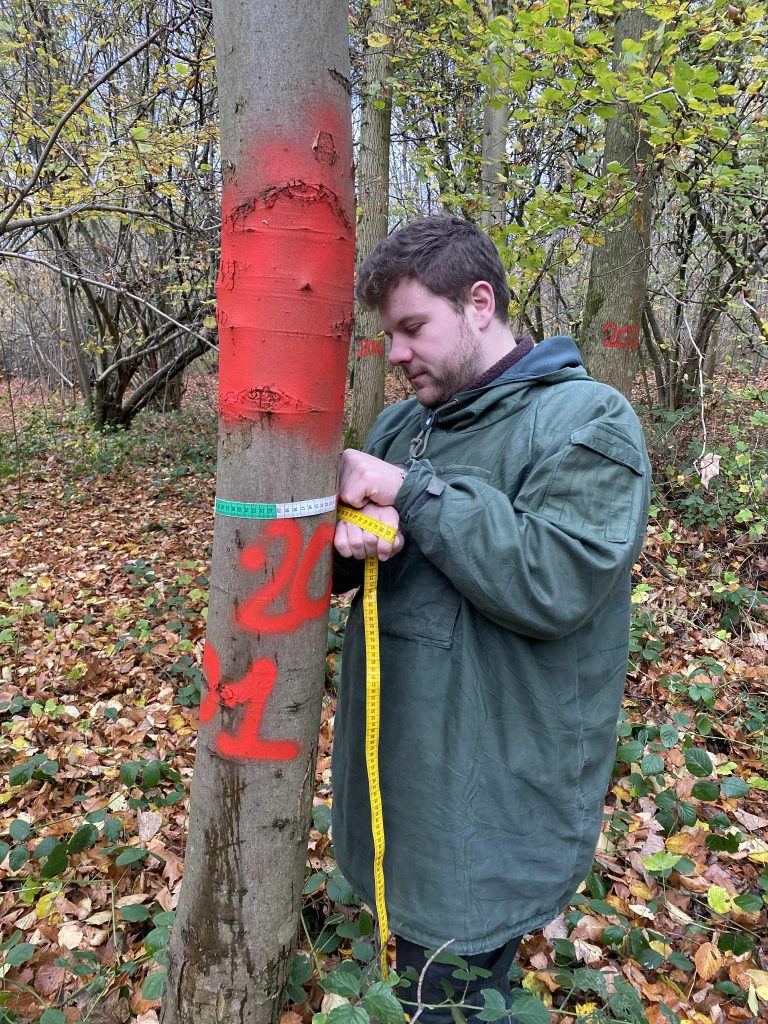
By far, most time was spent on analyzing every tree-related microhabitat, also known as “TreMs”:
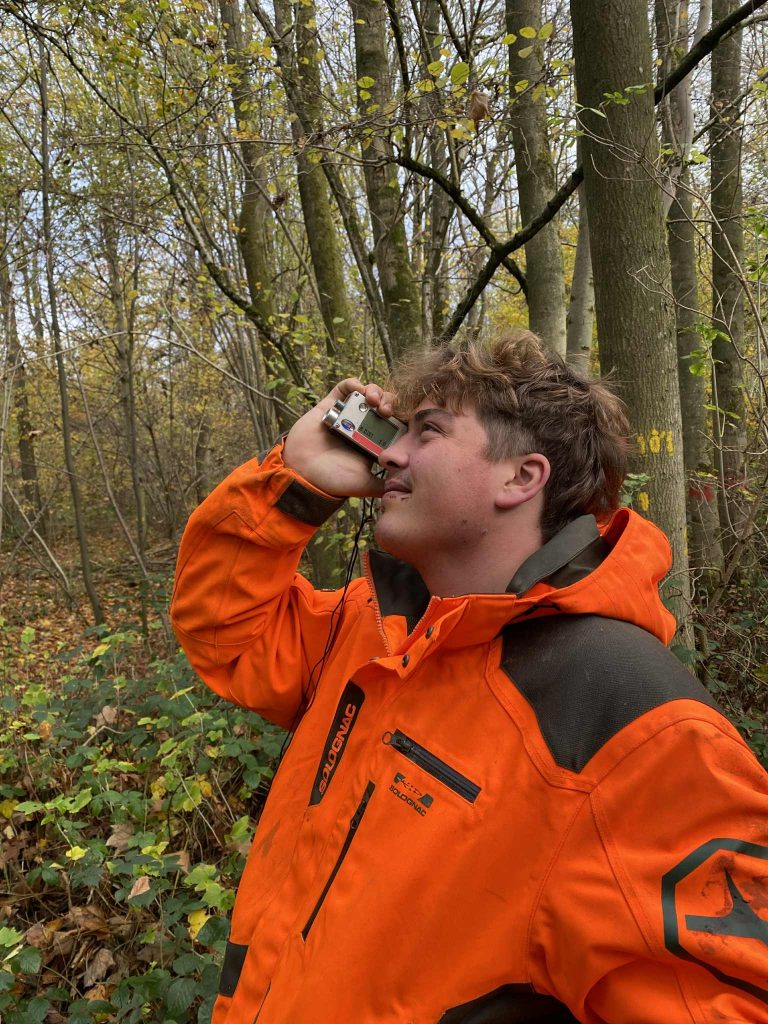
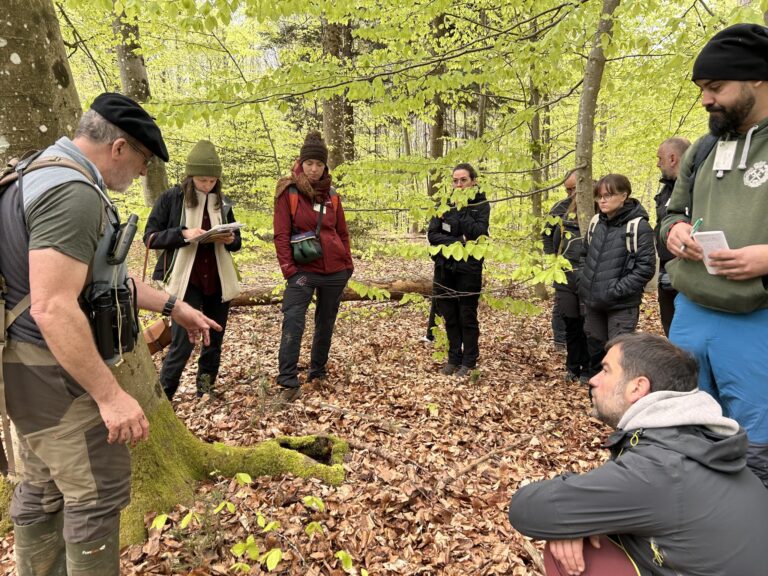
Well-equipped with binoculars and a PDF to guide their judgement, they went on to assess the length and height of each of the microhabitats. Both challenging and rewarding – a task that made them connect deeper to the forest site and the complexity of TreMs.
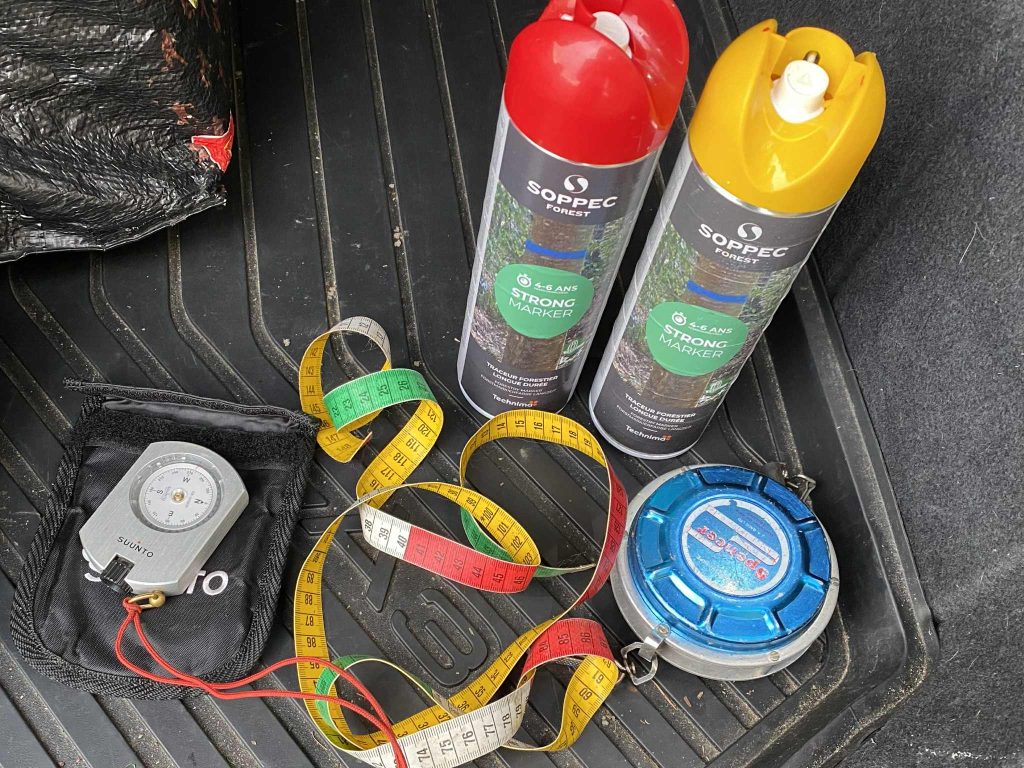
They also analyzed the height and volume of the trees, as well as various other forest characteristics. This work stands and falls with the right tools and team, says Antoine Van Lede:
To the future forest engineers one thing is clear: A forest doesn’t just exist to ensure production. It’s a place that holds much more than wood – as measuring TreMs helped reveal.
The same is true for forestry, states Samuel. As a “niche” or lesser-known field, marteloscopes can help expose what forestry is all about:
While no specific activities are planned yet by the faculty, the purpose of the new Gembloux – Agro-Bio Tech site is to indeed become a practice ground for students in all kinds of forest- and biodiversity-related disciplines. For now, they’d have to “wait and hope”, says Samuel – to see what teachers and students will make of and with the marteloscope they’ve helped create.
Setting up a training ground while in the process of learning everything there is to know about forestry, dendrology, or biodiversity conservation?
Something the students can definitely recommend:
According to Antoine, it’s also an opportunity to “exit the studio and enter the field”.
What feels most rewarding about this work is that the new marteloscope will stay with the university and support students at their faculty, even as Samuel, Antoine, Tom, Simon and Louis move on to graduate and work as forest engineers.
To share and keep track of all relevant tree and site-related data, the students produced a public fact sheet about the new Gembloux – Agro-Bio Tech marteloscope, as shown below.
Skip to PDF content