Testing SimInForest in the Field: First Training Exercise at the Křivoklát Marteloscope
Andreas Schuck
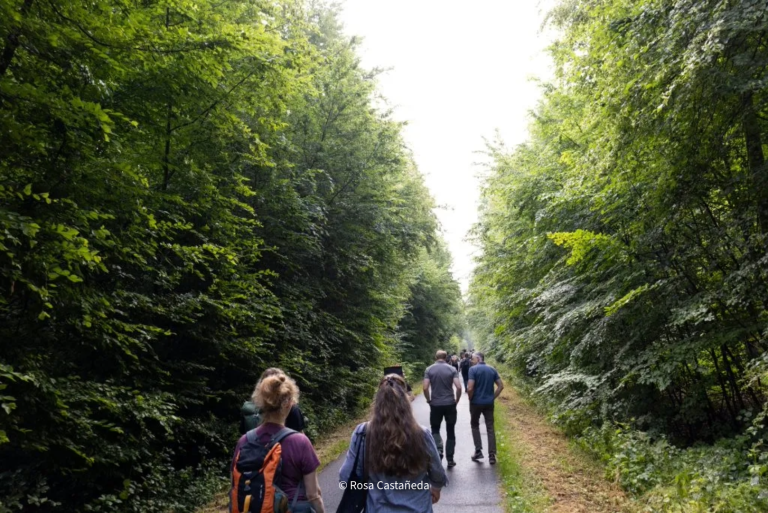
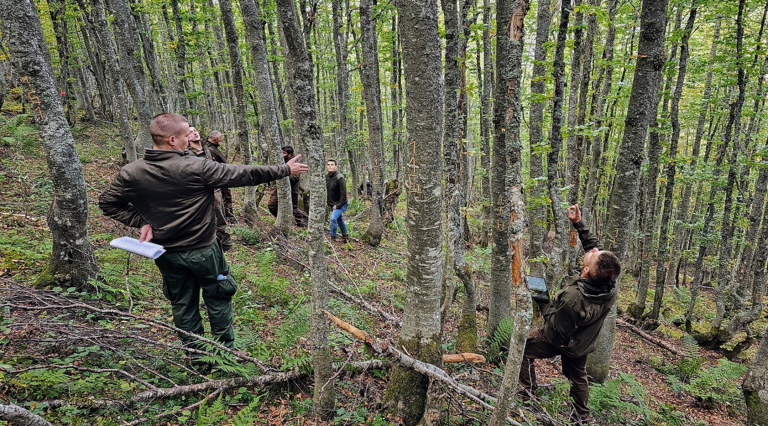
At the end of April 2026, the SimInForest project carried out its first internal field training exercise at the Křivoklát marteloscope in the Czech Republic. The event brought together four colleagues from the Czech Forestry Institute’s regional office in Pilsen, representing different areas of forestry expertise, including Regional Forest Development Planning and the National Forest Inventory. The exercise served as an important opportunity to test the SimInForest methodology in a real-world setting before involving larger groups of stakeholders.
What is SimInForest?
SimInForest is a European project that combines hands-on forestry training with advanced forest simulation models to support more integrative and sustainable forest management. The project builds on the concept of the Integrate Network marteloscopes: forest plots where every tree has been mapped and characterized in advance, allowing participants to carry out virtual management interventions directly in the field.
What makes SimInForest innovative is the addition of simulation tools that project how a forest stand may develop over the coming decades under different management decisions. By linking field-based tree selection exercises with computer simulations, participants can explore not only the immediate impacts of their choices but also their longer-term consequences for timber production, biodiversity, carbon storage, and forest resilience. The project aims to stimulate dialogue between forestry practitioners and scientists, helping to co-develop management approaches that balance multiple forest functions and respond to future environmental challenges.
Learning by doing
The Křivoklát exercise was intentionally organized as a small-scale pilot activity. Most participants had no previous experience with marteloscope training, and only one had received earlier training on tree microhabitats. This made the group particularly valuable for testing whether the exercise instructions and materials were clear and accessible to newcomers.
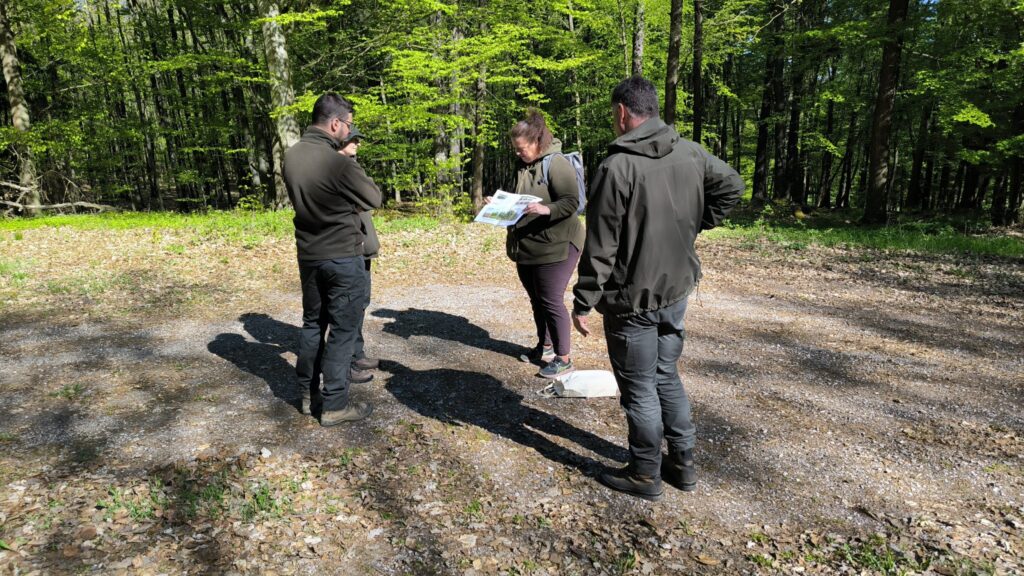
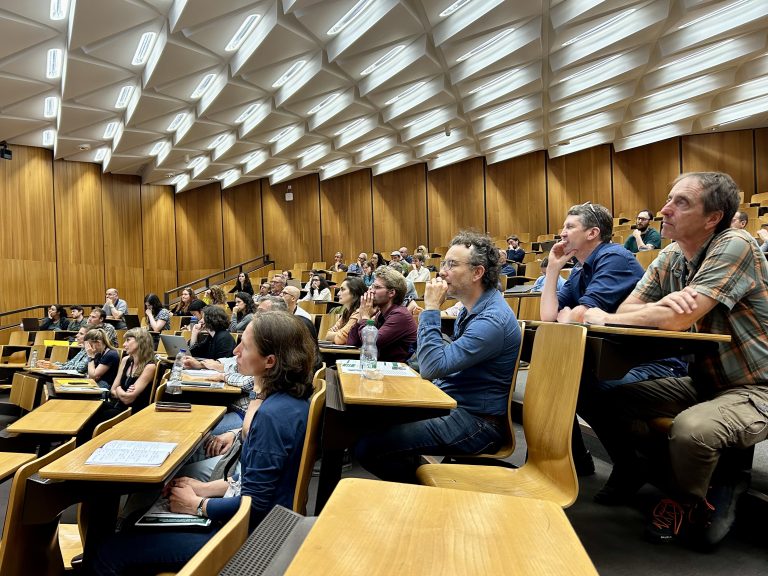
The training began with an introduction to integrative forestry, habitat trees, and tree microhabitats. Participants received supporting materials, including illustrated handouts and microhabitat catalogues, before being introduced to the tablet-based application used during the exercise.
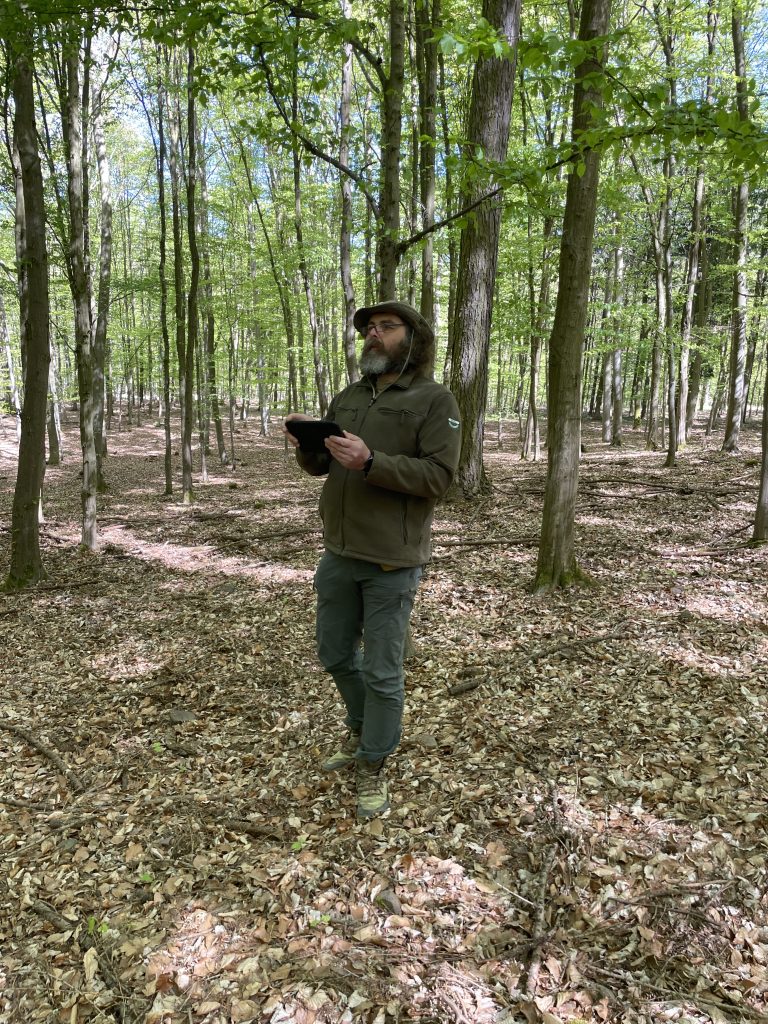
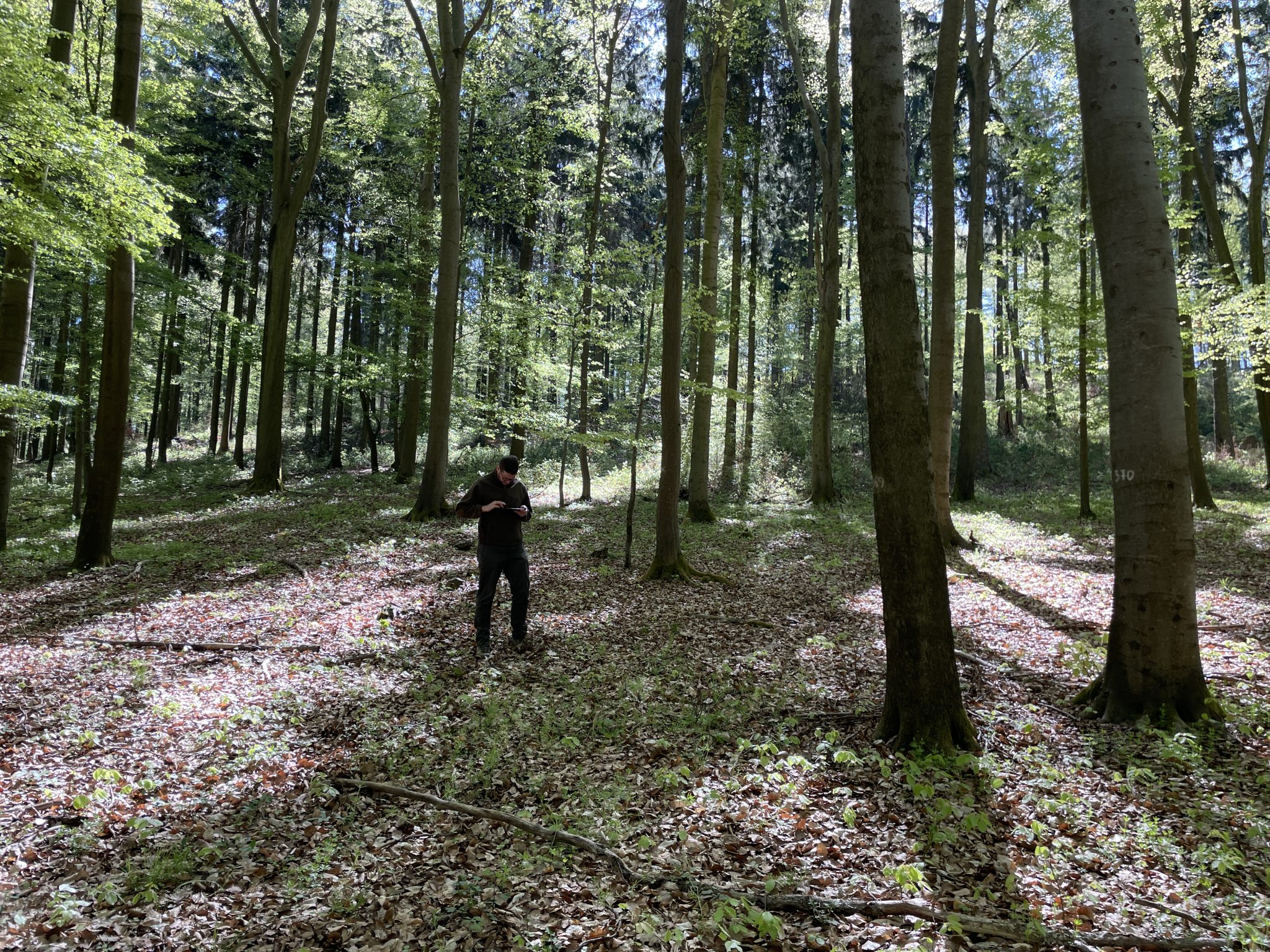
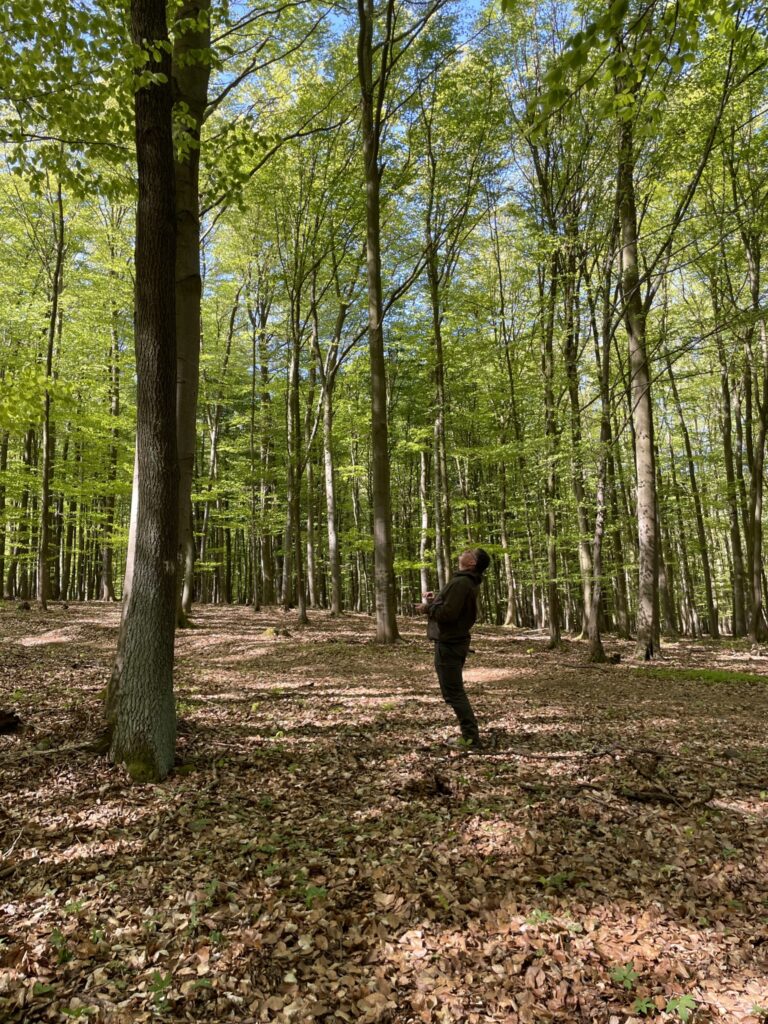
Each participant then carried out an independent assessment of the forest stand using a tablet. Working individually for more than two hours, they selected trees and made management decisions that were later processed through the SimInForest simulation workflow.
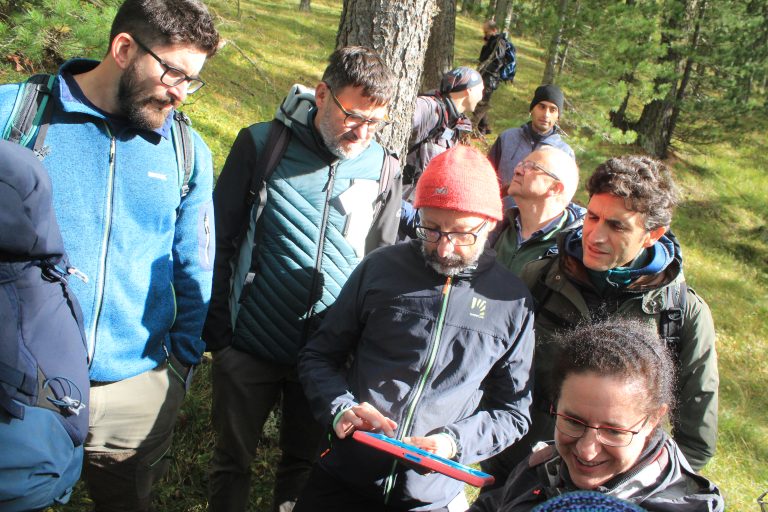
After the field session, the results were transferred to a laptop and the simulations were run. During a group discussion, participants reviewed and compared the different management scenarios generated through the exercise. This combination of field observation, decision-making, and simulation lies at the core of the SimInForest approach.
Valuable feedback for future exercises
The pilot exercise was successfully completed and provided valuable insights for improving future training events. Participants appreciated the opportunity to explore different management choices and showed strong interest in the simulation component. In particular, they wanted to better understand how the model reproduces management interventions over time, how trees are selected in future simulated harvests, and whether specific management preferences could be incorporated into the simulations.
The exercise also highlighted areas where further improvements could enhance the learning experience. Some participants felt that the introductory session presented a large amount of new information in a short period of time, especially regarding habitat trees and tree microhabitats. Others suggested that the objectives of the field exercise could be explained more clearly, particularly when deciding which trees should be retained as habitat trees and which should be treated as future crop trees or competitors.
Another key lesson was the need for more guidance when interpreting simulation results. While participants generally understood the overall conclusions, they expressed interest in a deeper explanation of the indicators, graphs, and differences between management scenarios.
Building better forestry through collaboration
One of the central goals of SimInForest is to create a space where scientific knowledge and practical forestry experience can be brought together. The diversity of professional backgrounds represented in this first exercise helped the project team assess how understandable and useful the methodology is for different forestry audiences. The feedback collected will now be used to refine the training protocol, improve the explanations provided to participants, and further develop the field methodology.
As SimInForest continues its activities across Europe, these early field tests play a crucial role in ensuring that the project delivers practical, user-friendly tools that help forest managers make informed decisions for resilient, multifunctional forests.