Surveying the House Where Many Live: Recap of the Very First “IBP Train-the-Trainers” Workshop
On April 15th and 16th 2026, 30 forest practitioners, forest owners, researchers, trainers, and students from 12 European countries gathered in southwest Germany for two intensive days dedicated to one deceptively simple question: How can we better understand the biodiversity potential of forests – in a way that supports real management decisions?
The answer, or at least part of it, was the Index of Biodiversity Potential (IBP), a field-based diagnostic tool that has steadily gained recognition across Europe over the last 15 years. Hosted through the Integrate Network and supported by the HE TRANSFORMIT project, the workshop combined classroom presentations and discussions, insights into the scientific background of the IBP, and extensive field training exercises to prepare future trainers to bring the IBP into their own forestry contexts and institutions.
From the classroom to the forest floor
On the first day, we were welcomed at the town hall of Binzen by Andreas Schuck (EFI) and Frank Krumm (WSL), introducing IBP experts Laurent Larrieu (INRAE, CNPF) and Pauline Marty (CNPF) as our field trainers. Little did we know that the next two days were about to be filled with a tandem of new learnings about the IBP, its theoretical background and a lot of practical knowledge on how to apply the tool in the field.
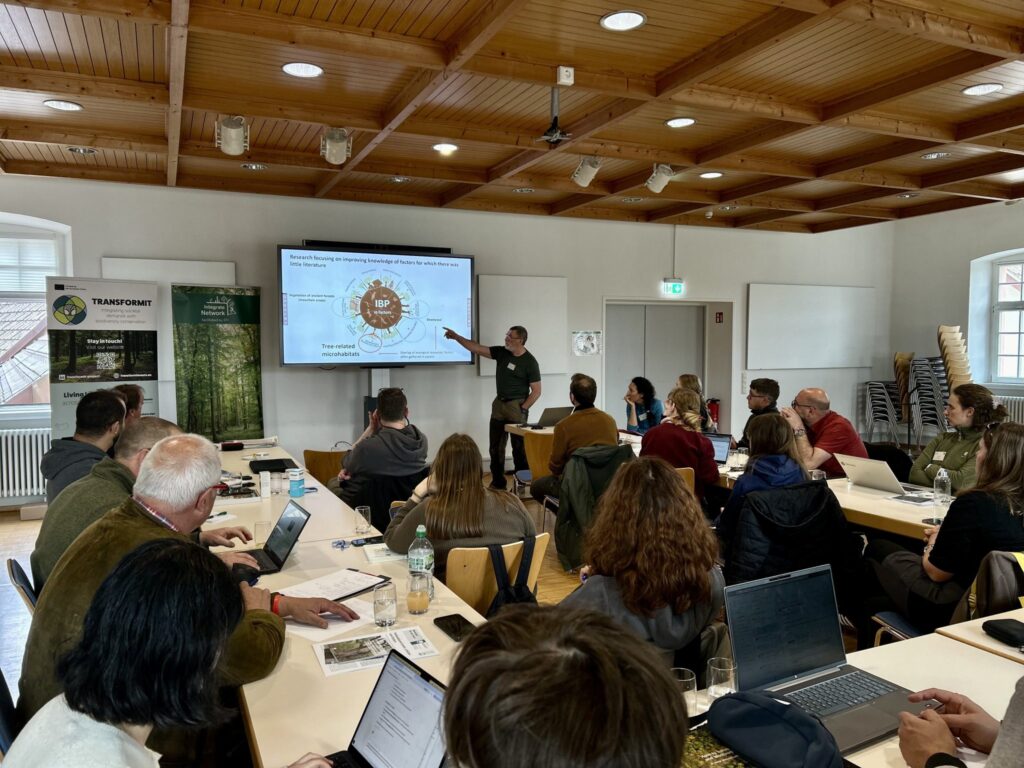
So, what is the IBP? For starters, rather than directly measuring species richness, the IBP evaluates the so-called hosting capacity, habitats and structural features that support biodiversity at the stand level. Pauline explained that the IBP is used as a diagnostic tool, based on ten factors, seven relating to forest management and three to context. These range from deadwood and vertical forest structure to ancient forest continuity and tree-related microhabitats (TreMs). Each factor is scored from 0 to 5, allowing a maximum of 50. The workshop quickly revealed how much ecological research hides behind this easy-to-apply tool. Pauline explained that the IBP is designed to work fast, ideally within 20 to 30 minutes per stand. She then proceeded to go through each IBP factor and why it matters. Let’s take, for instance, the factor for flower-rich open areas: For this factor, the percentage of flower-rich open areas is recorded in comparison to the surveyed area’s size of the stand. As many species not only rely on deadwood, but also the occurrence of flowers, or both, this factor is highly relevant. Some hoverflies species that need deadwood for their larvae and use the nectar from the flowers in the adult stage.
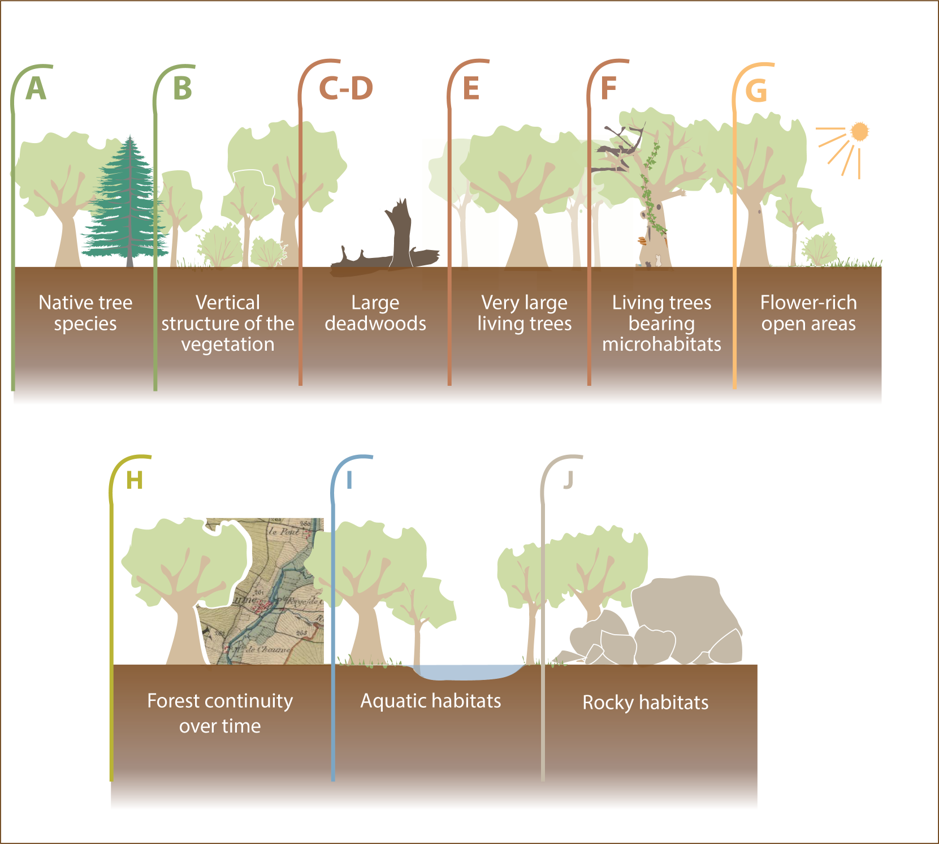
The IBP, a brief overview of the scientific background
Following the introduction of the 10 factors by Pauline, Laurent took over and gave insights into the science behind the IBP. What appears in the field as a quick and practical scoring tool is, in fact, rooted in two decades of ecological research and development. Laurent reflected on the beginnings of the so-called “Paleo-IBP” around 2004, when he and his colleague Pierre Gonin first explored the idea of creating a rapid biodiversity assessment method for forest managers during their routine work. The first version focused on only five factors – large snags, large logs, very large trees and trees bearing “defects”, large nests, and aquatic habitats. This work eventually led to the landmark 2008 publication introducing the IBP as a “quick and easy method” that did not require taxonomic expertise. Laurent explained how the following years saw continuously refining and validating of the tool. Research explored whether the factors complemented each other, how sensitive the scores were to different forest types and management intensities, and how certain ecological components – especially tree-related microhabitats, deadwood, and forest continuity –could be better understood scientifically. Further, the IBP was adapted to different biogeographic regions (e.g. temperate Europe and the Mediterranean Basin). This process is still ongoing as new regions plan to apply the IBP. Despite all this scientific depth, Laurent stressed that the strength of the IBP remains its practicality: a fast, accessible field tool!
“TreMs are way nicer!”
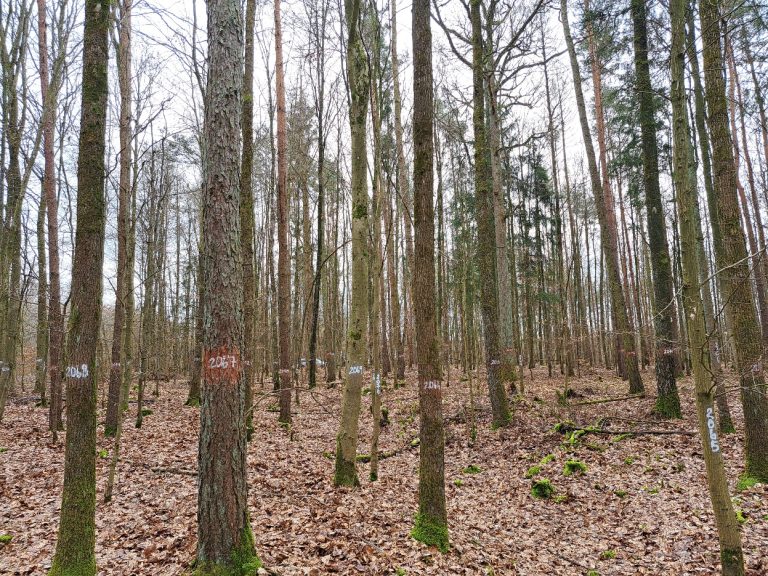
After all this, it was time to head to the field! We drove to a local communal forest, which Frank introduced to us. The stands consist mainly of high-quality oak with an understory of hornbeam. “They serve the needs of the community as a financial reserve, for example, to renovate a school”, Frank explained.
It was then time to investigate the diverse IBP factors hands-on! Spring was in full swing as the trees had their fresh green leaves, and the ground was covered with spring flora. To start off, Pauline introduced the five layers of the factor, also called ‘vertical structure’ (e.g. 1.5-7 m being the third layer). Here, a layer counts when you can observe a 20% occupancy of leaves in that layer. Important to note is that spring flowers on the forest floor would not be counted as an area for flower-rich open areas, as this factor looks at flowering plants linked to gap dynamics, open areas, and forest edges.
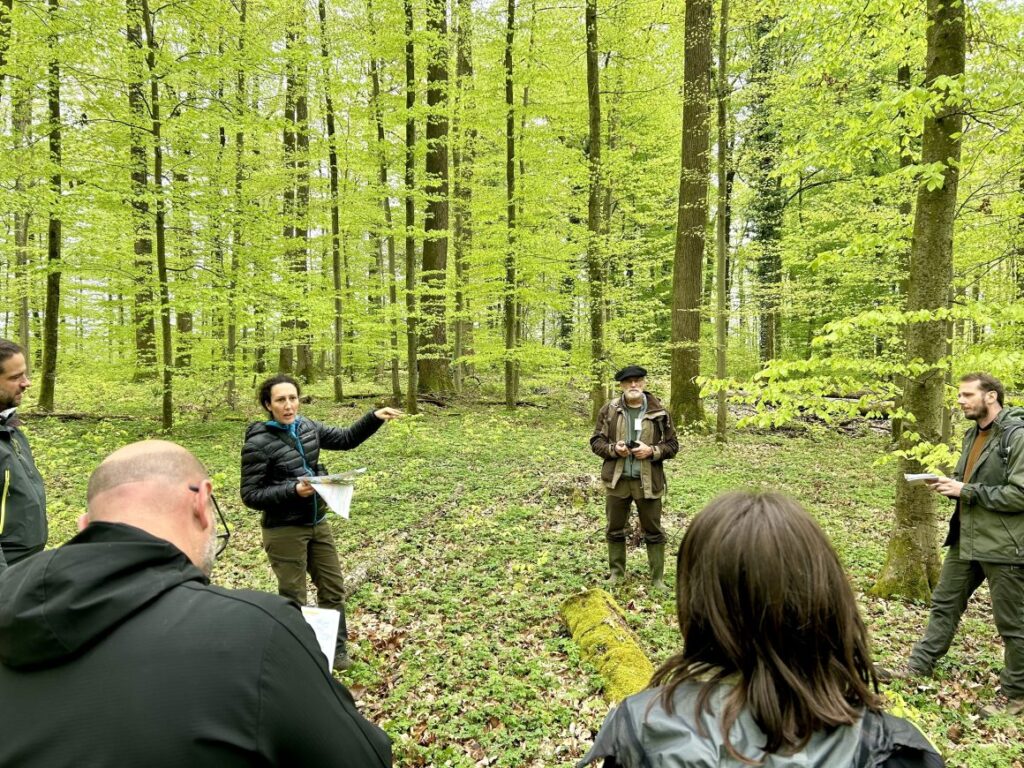
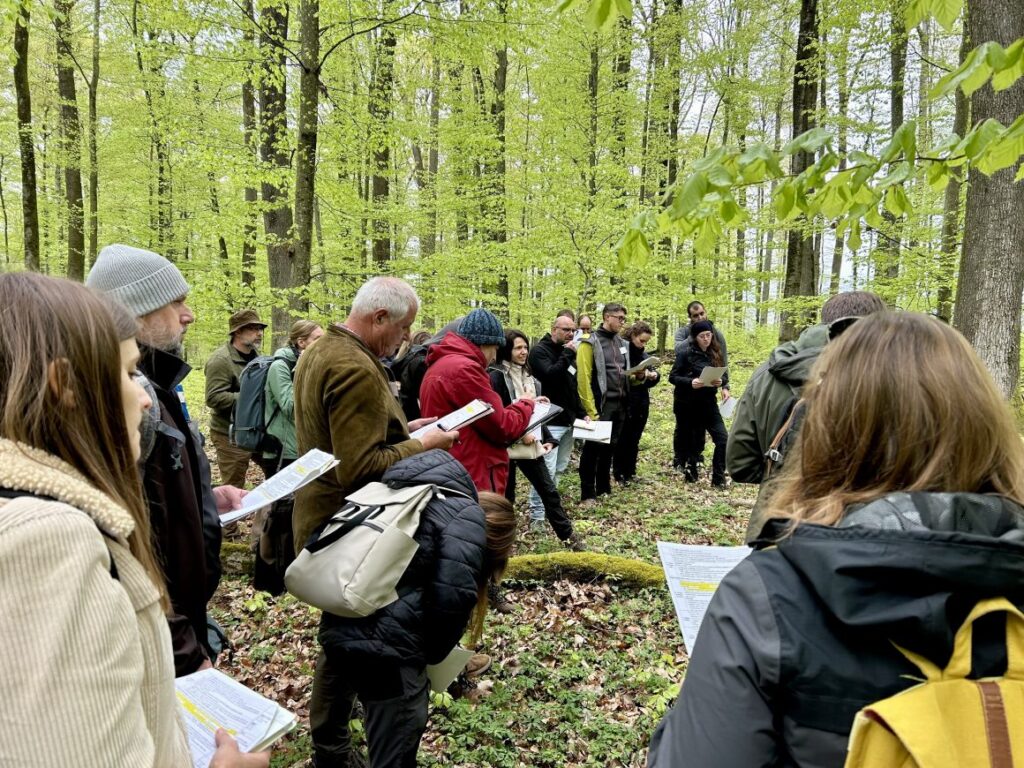
Laurent advised to ‘eliminate’ individual factors as quickly as possible. This means that once the threshold of a factor is reached (e.g. 5 different tree genera), one can neglect that factor, as the maximum score of 5 points is reached. This speeds up the process of filling out the survey and allows forest practitioners to concentrate on the factors which are more difficult to record.
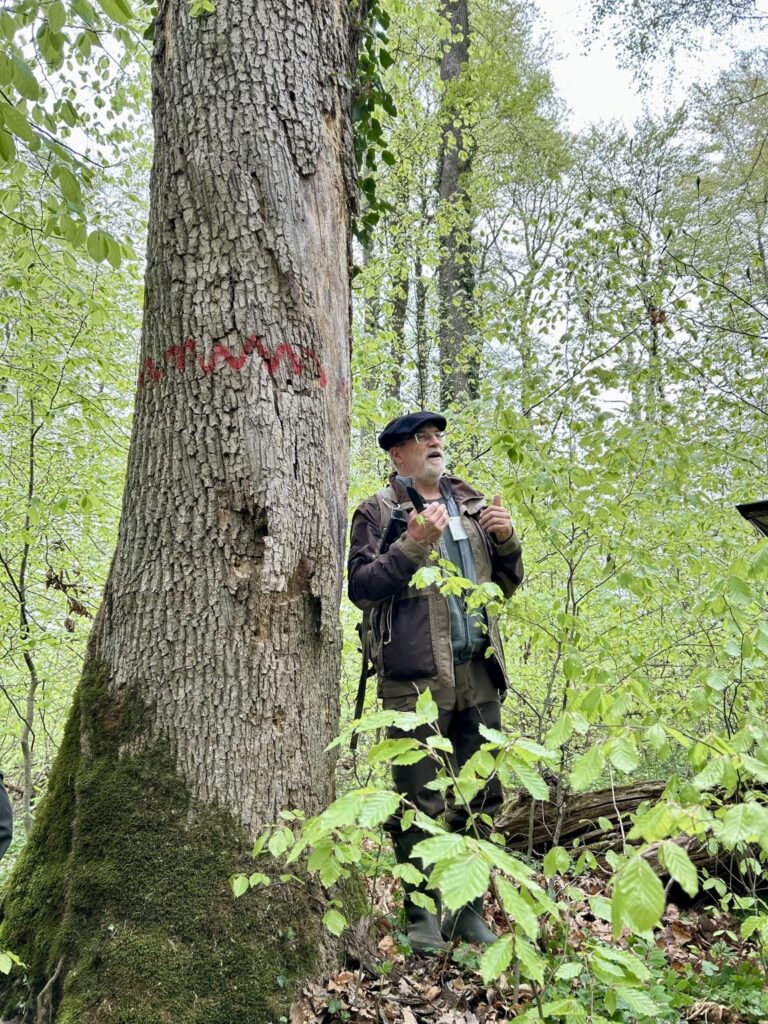
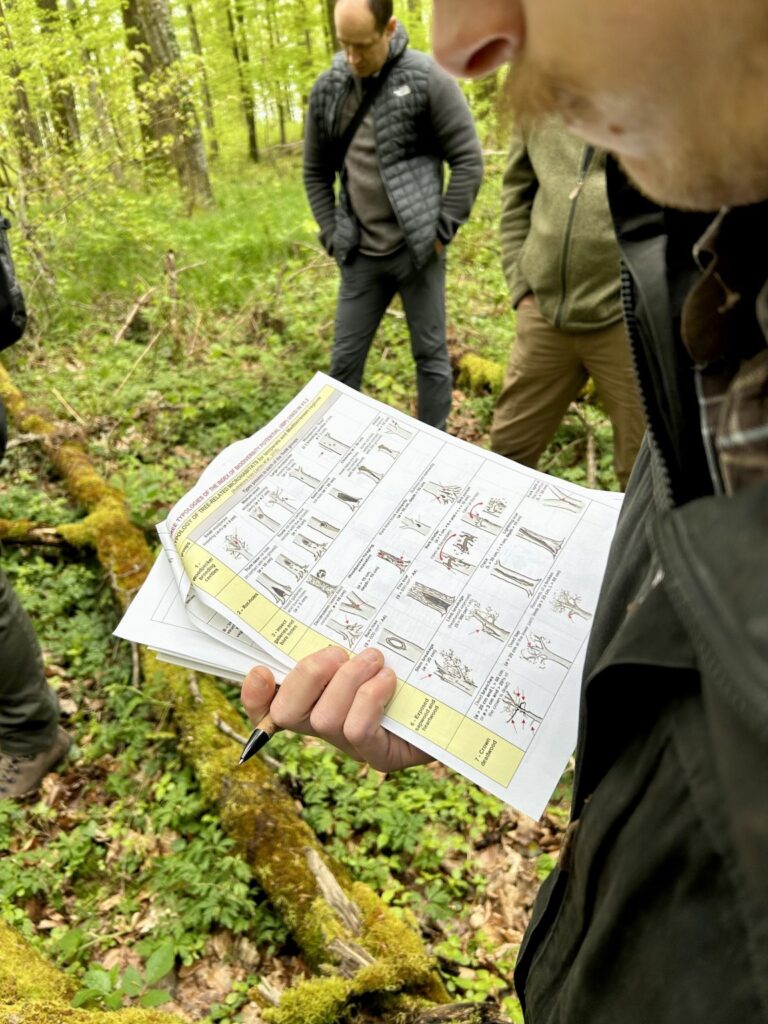
When we walked further, we came across an atypical kind of pond, a skidding trail, with an aquatic habitat that hosts different species. While this sounds great for biodiversity, skidding trails are caused by harvesting machinery, thus damaging the soil of the forest. This is one of the main reasons why, according to the IBP framework, it is not counted as an ‘aquatic habitat’ and therefore not recorded within the survey. This was the final stop before wrapping up our walk, now having a much better understanding of each IBP factor and ready to soon put the knowledge into practice the next day.
As a final stop we partook in a guided tour through Frank’s farm in Binzen, learned about the local wine culture, and got a small taste of the wine and liquor he makes from his own grapes and cultivated fruit trees.
Walking a plotline
On the second day, we headed out to the Kandern Community Forest, which is part of the foothills of the Black Forest. We met at the natural monument “Beheleneiche”, an old oak tree that has an estimated age of more than 300 years. It only died and fell over around a year ago. Its tree trunk remains, as lying deadwood, offering food and habitat for many organisms – a haven for biodiversity!
So, what was waiting for us that day? With the hope of putting our newly acquired knowledge into action and completing an IBP survey, we divided into small groups. Not sure where to start, Pauline and Laurent helped us by introducing diverse inventory approaches, including 3 possible methods: a route in a) concentric circles, b) a star shape or c) parallel lines. Each group got to pick one method, with our group choosing the concentric circle one.
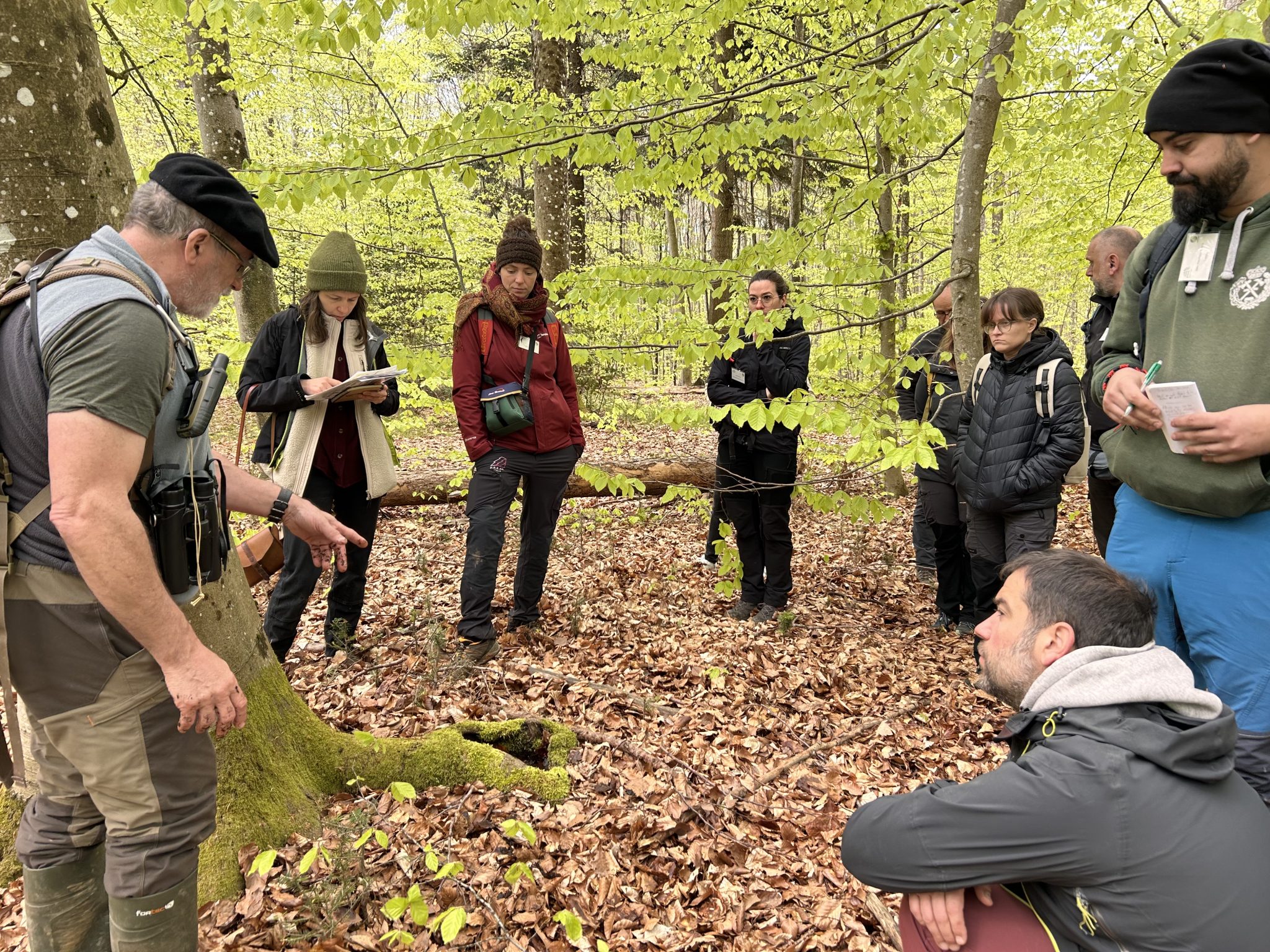
We then started our survey in the Behleneiche marteloscope, named after the monumental oak tree. To save time, we learned to check the factors as much as possible from one location, as some required much more discussion or detailed observations. Native tree genera were an easy exercise: we spotted beech, maple, oak, wild cherry, and pine… check, 5 points! We then marked the broken tree as a snag, but … wait … another participant noticed that the tree was still alive! Still important for the IBP survey, as it may bear microhabitats. We then were able to count some medium-sized logs as lying deadwood. We also used a TreMs field guide and identified a split fork in a wild cherry.
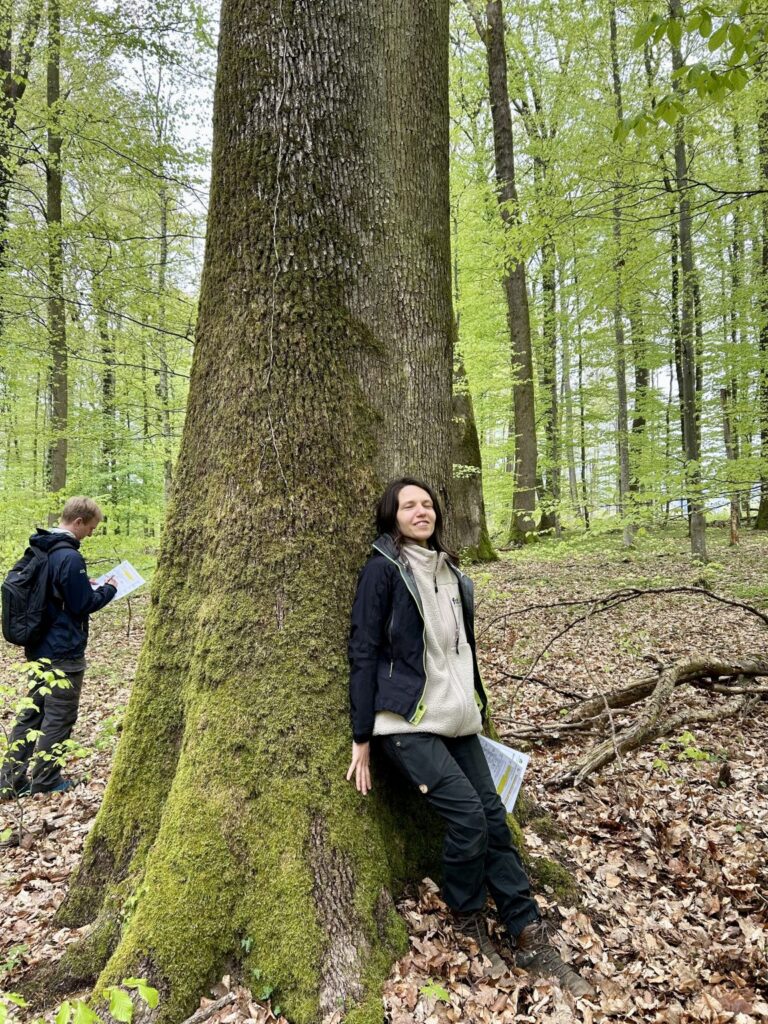
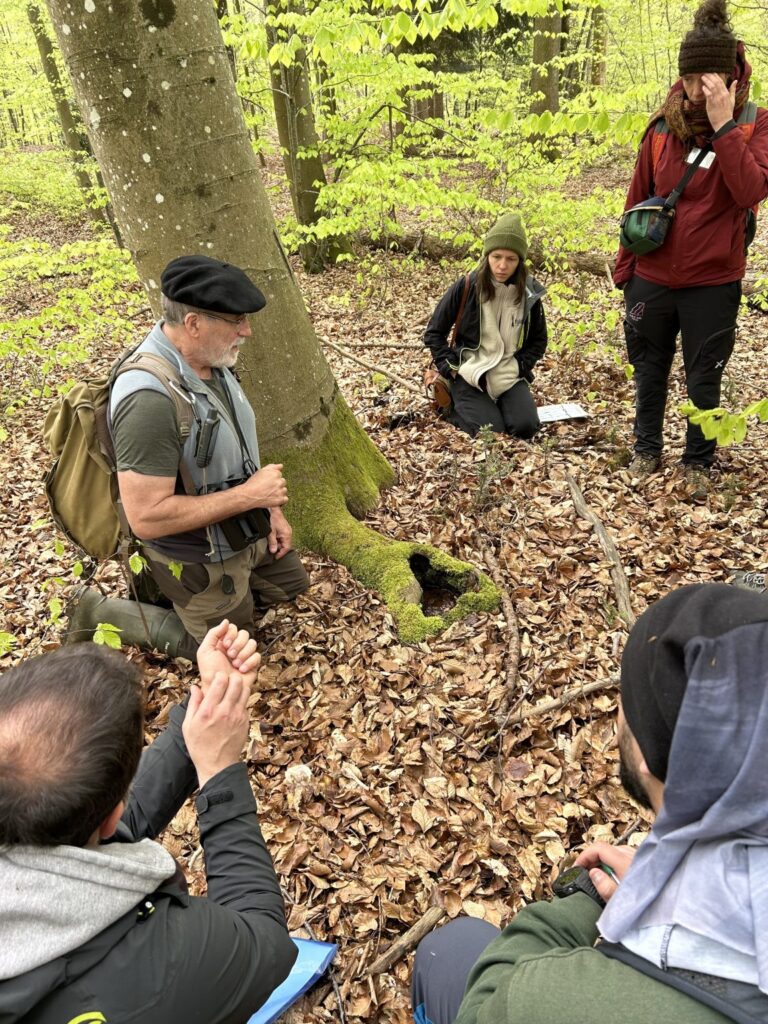
After the inventory of the inner circle we went on to survey the circular route. We paid particular attention to the factor of ‘vertical structure’, while identifying a few very large trees that were checked for additional TreMs. We then wrapped up our survey : 5 points for native tree species, standing deadwood, living trees bearing microhabitats, very large trees, 2 points for large lying deadwood and vertical structure. The factors with no score were flower-rich open areas, forest continuity, aquatic and rocky habitats, as there were simply none present.
We then started to gather at the Behleneiche, to exchange on what we had surveyed. The local forester, Otto-Jesko von Schröder, joined and shared some insights on the Kandern Community Forest and its management. He highlighted the aim of ensuring a large number of different tree species in stands, emphasising those that can best cope with climate change impacts. One important detail we learned from Otto-Jesko was that formerly these sites were used for mining, which means that in the past, parts of these forests were cleared. For the IBP score this means 0 points for forest continuity over time.
Back in the classroom, the final afternoon sessions gave participants the opportunity to reflect on the IBP survey and place them into a broader operational context, learning about special cases (e.g., the uncapped version of the IBP). They also offered a glimpse into the future development of the IBP, including digital tools and applications designed to support field inventories and data collection more efficiently. By the end of the workshop, the IBP no longer felt like a simple scoring system, but rather like a practical framework that truly connects ecological understanding. Quite a few participants already announced that they will initiate training events in their home countries. Thus, it seems, the mission of training “future” trainers was already accomplished in Binzen! In any case, a memorable workshop for all – one that will hopefully continue to bear its fruits in many forests across Europe.
For more knowledge and guidance on how to apply the IBP, visit: https://www.cnpf.fr/ibp-index-biodiversity-potential